



What are grief and bereavement?
Bereavement is the situation of having lost someone close: a partner, a parent, a child, a friend, sometimes a pet. Grief is the natural response to that loss. It touches emotions, the body, thoughts, relationships and the sense of who we are. There is no right way and no fixed timetable to grieve: for some people the pain comes in waves for months, for others it surfaces years later, around an anniversary or a new life event.
Grief is not only about death. A divorce, a miscarriage, a diagnosis, the end of a career or leaving one’s country can bring the same mix of sadness, anger and disorientation. On this page you will find an overview of what grief can look like, what makes it harder, how therapy can help, and therapists from our network who offer support in person or online, in several languages.
Common reactions to loss
- Sadness, longing and crying that can arrive without warning
- Waves of anger, guilt, regret or relief, sometimes all on the same day
- Difficulty concentrating, forgetfulness, feeling in a fog
- Changes in sleep, appetite and energy; physical tension or exhaustion
- Replaying the last moments, or what could have been done differently
- Withdrawing from others, or feeling that nobody really understands
- Questions about meaning, faith, identity and the future
These reactions are part of normal grief. They usually soften over time as the loss is gradually integrated into life, even if it never completely disappears.
Grieving far from home
Many of the people we work with live abroad. Losing someone from a distance brings its own difficulties: hearing the news by phone, not being able to say goodbye, missing the funeral because of travel or paperwork, or returning to a host country where colleagues and friends never knew the person who died. Grief may also have to be lived in a second language, far from the rituals and the family that would normally offer comfort. Feeling isolated in this situation is common, and it is a good reason to look for support.
When grief becomes harder to carry
Sometimes grief does not ease, or it gets stuck. Signs that it may need more attention include intense longing or preoccupation with the person that stays the same after many months, an inability to accept the death, feeling that life has lost all meaning, or avoiding everything that recalls the loss. This is sometimes described as complicated or prolonged grief.
A sudden, violent or traumatic death can also lead to intrusive images, nightmares and strong anxiety (see grief after trauma). And grief can slide into depression, with persistent hopelessness, loss of interest and difficulty functioning.
How therapy can help
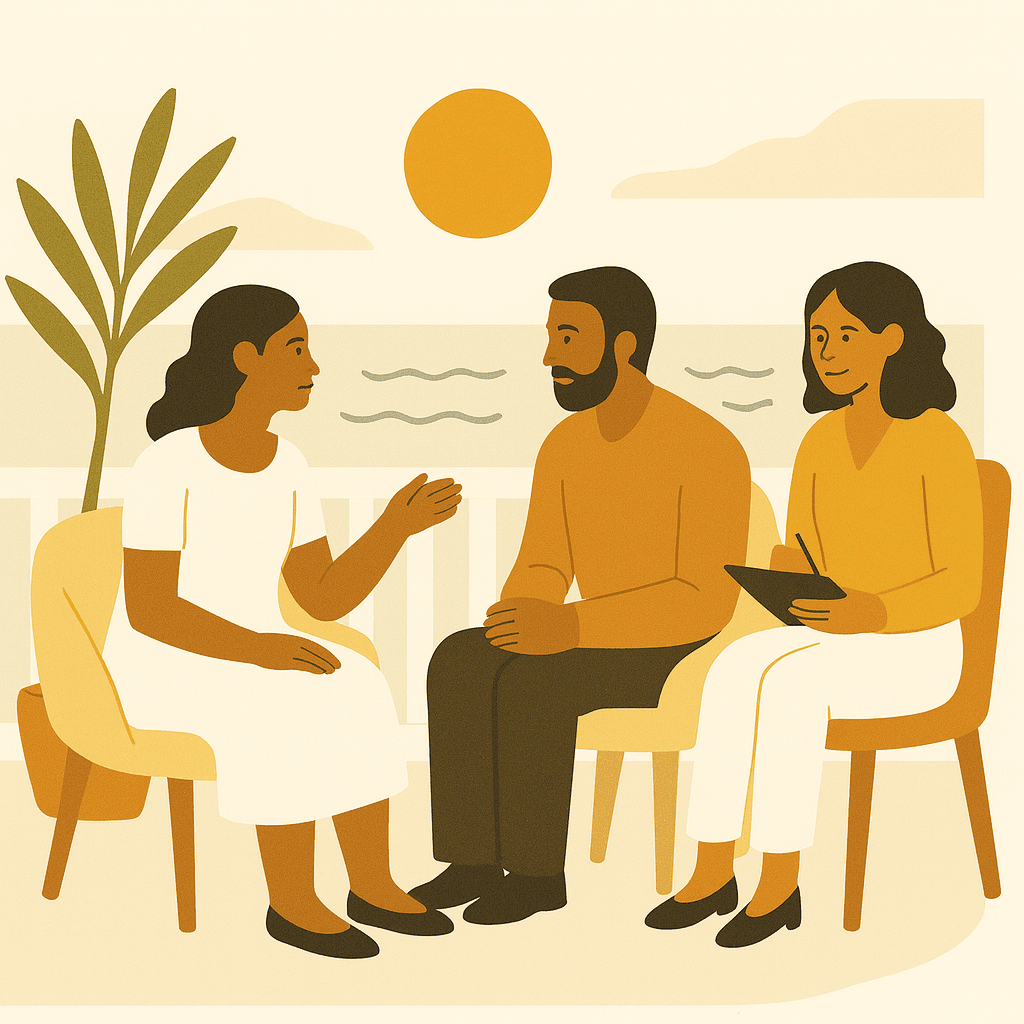
Therapy offers a protected space to talk about the person who died and about the loss itself, at your own pace and in your own language. A therapist does not try to make the pain go away quickly; they help you make room for it while you keep living. Depending on your needs, therapy can help you to:
- Express emotions that feel too heavy or too contradictory to share with family
- Make sense of what happened and work through guilt or unanswered questions
- Find ways to stay connected to the person while adapting to life without them
- Rebuild routines, relationships and a sense of direction
- Address trauma symptoms when the death was sudden or distressing
Therapy approaches that can help
Grief counselling is often the first step. When grief is prolonged, complicated grief therapy offers a more structured approach. EMDR or trauma-focused therapy can help after a traumatic loss, while ACT, narrative therapy and art therapy support meaning-making and expression when words are hard to find.
Looking after yourself while grieving
- Accept that grief comes and goes; good days do not mean you have forgotten
- Keep a few simple routines: meals, sleep, a short walk, some daylight
- Create your own ritual if you could not attend the funeral: a letter, a photo, a candle, a call with family at the same time
- Tell one or two people what helps you and what does not
- Expect anniversaries and holidays to be harder, and plan something gentle for them
Complicated grief and grief after trauma
Most grief slowly becomes more bearable over time. Complicated grief, now described as prolonged grief disorder, is diagnosed when intense longing or preoccupation with the person who died lasts much longer than expected (at least six months in the WHO classification, twelve months in the American one) and makes daily life very difficult: emotional numbness, difficulty accepting the death, avoiding reminders or feeling that life has lost its meaning.
Grief after trauma, or traumatic grief, happens when a loss was sudden, violent or witnessed, such as an accident, suicide or a death during a disaster. Trauma symptoms like flashbacks can then block the natural grieving process. Grief-focused therapy and trauma approaches such as EMDR can help; see also grief counseling.
When to seek help
Consider talking to a therapist if grief is stopping you from working, sleeping or caring for yourself, if months have passed and nothing seems to move, or if you feel alone with the loss. If you have thoughts of ending your life, contact your local emergency number (112 in Europe) or a crisis line straight away.