



Understanding couples conflict
Every couple argues sometimes. Conflict becomes a concern when the same arguments keep coming back, when discussions turn into blame or silence, or when one or both partners no longer feel safe, heard or close. Couples conflict is not a diagnosis; it is a way of naming a painful pattern between two people.
Common signs
- The same disagreements return without being resolved
- Criticism, defensiveness or withdrawal during discussions
- Feeling misunderstood, lonely or on guard in the relationship
- Less affection, intimacy or shared time
- Difficulty repairing after an argument
Possible contributing factors
Conflict rarely has a single cause. Stress at work, a move abroad, the arrival of a child, illness, money worries, different cultural or family expectations and past relationship experiences can all play a part. Attachment patterns, the way each partner reacts when they feel distant or criticised, often shape how arguments unfold.
How therapy can help
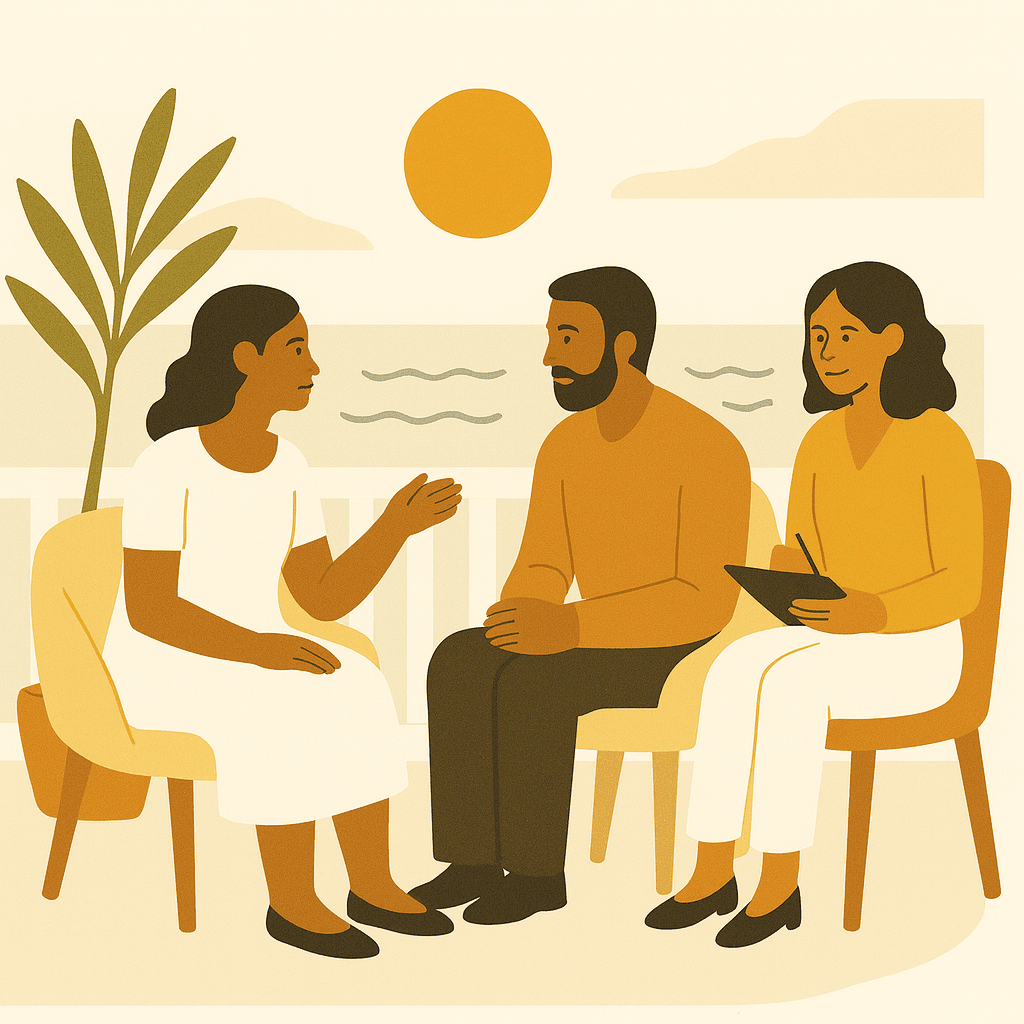
In couples therapy or Emotionally Focused Therapy (EFT), both partners work with a therapist who does not take sides. Sessions help identify the cycle that keeps repeating, express the needs and fears underneath it and practise new ways of talking and repairing. Individual therapy can also help one partner understand their own patterns. For couples from different cultures, see intercultural couples support.
Practical steps
- Pause a discussion that is escalating and agree when to come back to it
- Speak about your own feelings and needs rather than your partner’s faults
- Make and accept small repair attempts after an argument
- Set aside calm time together that is not about problems
If there is violence, threats or fear for your safety in the relationship, couples therapy is not the first step: contact local emergency services or a specialised support service.
Medical disclaimer: This content is for general information only and does not replace diagnosis or treatment from a qualified professional.