NiceMora Neustadt
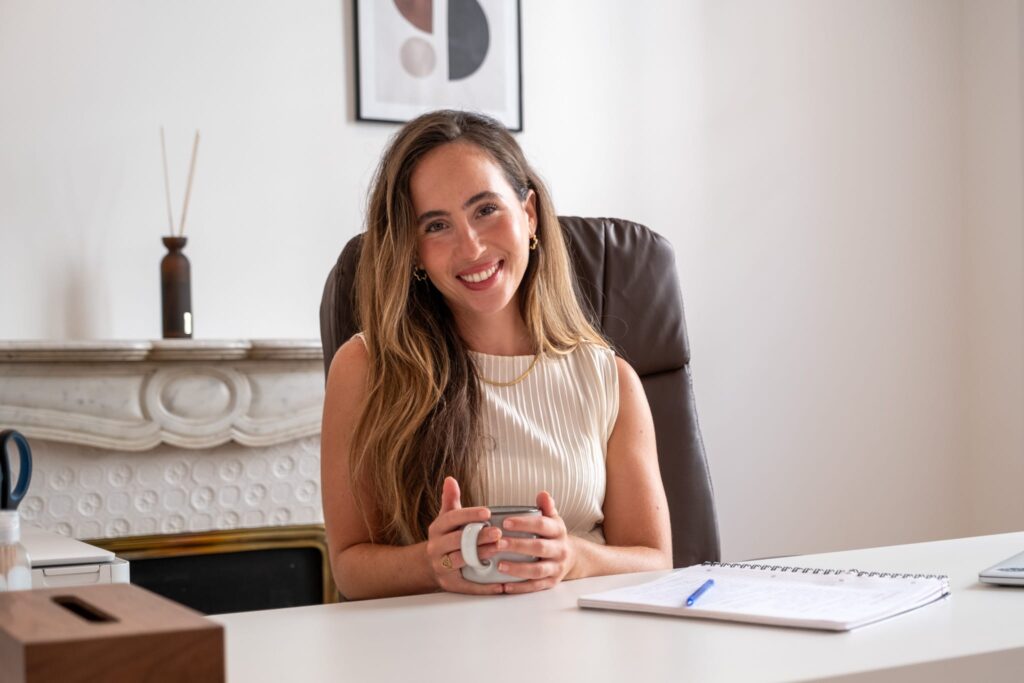
I am a clinical psychologist and psychotherapist, working with adults and couples. My journey into psychology was deeply influenced by my experiences growing up…
View profileFind help and support for Integrative Therapy in Nice
NiceI am a clinical psychologist and psychotherapist, working with adults and couples. My journey into psychology was deeply influenced by my experiences growing up…
View profile
NiceClinical Psychologist & Psychotherapist RPPS No. 10009716845 Founder of My International Therapy & Centre Pensées Trauma-informed approach • CBT • EMDR • Schema therapy…
View profile
BarcelonaI'm a psychotherapist and I work from a humanist and integrative approach. I accompany people in Spanish and English, and work with local and…
View profile
NiceClinical Psychologist & Psychotherapist RPPS No. 10009716845 Founder of My International Therapy & Centre Pensées Trauma-informed approach • CBT • EMDR • Schema therapy…
View profile
I have been working as a psychologist for more than eight years, in private practice as well as with children in orphanages and refugees…
View profile
antibesI am a clinical psychologist trained in Peru and a therapist working with adults, offering sessions in both English and Spanish. I was born…
View profile
BarcelonaI am a clinical psychologist (general sanitario) graduated from the University of Valencia and trained at the Autonomous University of Barcelona (Master's in General…
View profile
Feeling overwhelmed, stuck, or like something isn't quite right, even though you're keeping things together on the outside? You may find yourself overthinking, feeling…
Integrative therapy combines different therapeutic approaches to fit the person’s needs. Instead of using one fixed method for everyone, the therapist may draw from cognitive, behavioural, psychodynamic, humanistic, mindfulness, somatic or relational approaches. The aim is to create therapy that matches the client’s goals, history, symptoms and pace.
This approach may help with anxiety, depression, stress, emotional overload, low self-esteem, trauma-related reactions, relationship difficulties or life transitions. It can also help people who are unsure which type of therapy would suit them best.
Sessions usually begin with the person’s current situation. The therapist may ask about symptoms, relationships, work, family, stress, coping strategies, previous support and what the person wants to change. This helps clarify the main difficulties and choose a useful direction for the work.
Integrative therapy can be practical, reflective or both. Some people need tools to manage anxiety, improve communication, set boundaries or reduce stress. Others need space to explore deeper patterns, past experiences, emotions, grief, shame or identity questions. The therapist can adapt the work as the person’s needs change.
Depending on their training, therapists may include elements of cognitive behavioral therapy, psychodynamic therapy, humanistic therapy, mindfulness or somatic therapy. This does not mean using techniques at random. The therapist should explain the approach, invite feedback and review progress regularly.
Integrative therapy may suit people who want both insight and action. It can help them understand repeated patterns while also building more useful coping strategies. The work may be short-term for a specific issue or longer-term for complex concerns.
Integrative therapy does not replace emergency support, diagnosis or medical treatment. It offers a professional space to reduce distress, understand yourself more clearly and build more sustainable ways of living.

When the summer crowds leave Nice, some residents feel more isolated while others carry stress from busy jobs; both are common reasons to look into integrative therapy. The therapist draws on different methods, for example cognitive, humanistic or body-based tools, and explains why each one is used.
Online sessions by secure video help if you live elsewhere on the Côte d’Azur, commute to Monaco or spend part of the year away. Psychiatrists’ consultations are covered by the Assurance Maladie within the coordinated care pathway, while most other private sessions are paid directly and may be partly refunded by your mutuelle. The first session is a good moment to talk about your expectations and see whether integrative therapy suits you.
For Integrative Therapy in Nice, you can usually expect a price around
Workshops and resources linked to this therapy and this city.
Benefit from a well implemented health center with physical locations
We verify the therapist profiles available through the platform.
My International Therapy, unlike most platforms, offers offices you can visit in Nice
A platform thought and made by E.U licensed therapists, with verified health support.
Choose a verified therapist, login to your dashboard manage your booking
Send a message or book through your therapist's dedicated page
Login to your secure patient's dashboard
Easily message your therapist and manage your bookings
Integrative therapy combines methods from several approaches, such as CBT, psychodynamic, humanistic and body-oriented work, and tailors them to the person instead of applying a single model. The therapist chooses tools according to your needs, your goals and what proves helpful over time.
Integrative Therapy is often used for concerns such as Anxiety, Depression, Life transitions, Relationship issues, and Stress.
The therapy page also shows which therapists on MIT currently offer this approach.
A first session usually focuses on understanding what brings you to therapy, what you want to change, and whether the therapist’s style feels like a good fit.
You do not need to prepare anything perfect in advance. It is normal to start with questions, uncertainty, or mixed feelings.
This depends on your goals, the complexity of what you are dealing with, and how structured the approach is. Some people use this therapy for short-term focused work, while others stay longer for deeper change.
Availability depends on the therapist. On MIT, you can check the therapist cards and profile pages to see whether online sessions are offered.
Fees vary by therapist. When no live therapist prices are available yet, the usual range for this therapy is around €80–€140 per session.
Start by reading the therapist’s profile, experience, languages, online/in-person availability, and approach. Then check whether the person works with the kind of issue you want help with.
A good fit is often about both expertise and how safe, understood, and comfortable you feel with the therapist.
Yes. MIT profiles can include direct messaging, and therapists can also activate online booking when available.
This helps patients ask practical questions before committing to a first session.
That is very common. You can start by contacting a therapist, explaining what you are struggling with, and asking whether this approach fits your goals.
If no therapist is listed yet for this therapy, you can still explore related approaches and pathologies on the site.
It depends on the therapist. Some see clients in person in Nice, others work only online by secure video, and some offer both; the format is indicated on every profile. Online sessions can be a practical option if you live elsewhere on the Côte d’Azur or spend part of the year away.
Yes. Therapists in the network work in English, French and other languages. See the English-speaking and French-speaking therapists in Nice, or check the languages listed on each profile.
Psychiatrists are medical doctors, and their consultations are covered by the Assurance Maladie when you follow the coordinated care pathway. Sessions with psychologists and psychotherapists are mostly paid directly. Under the “Mon soutien psy” scheme, a limited number of sessions with participating psychologists can be partly reimbursed, and many mutuelles or expat insurances refund part of private sessions: check your contract. Therapists give you an invoice you can submit.
Fees are set by each therapist and displayed on their profile. The indicative ranges shown on this site are around €80 to €180 per session for most individual approaches, €120 to €220 for couples or family sessions and €70 to €130 for coaching, career counselling or parenting support. A session usually lasts 50 to 60 minutes, weekly or every two weeks.
Therapy cannot respond to emergencies. If you or someone near you is in danger, call 112 (European emergency number) or 15 (SAMU, medical emergencies). For suicidal thoughts, the national prevention line 3114 is free and available 24/7.
Start with what matters most to you: the language, the topic you want to work on, the approach, in-person or online sessions and the fee, all shown on the profiles. If you would like help choosing, tell us what you need and we will suggest therapists. Your impression after the first session counts too.
Explore other therapy options available in Nice. Click a therapy to see therapists who offer it in this city.
Group workshops led by our therapists, in our centres and online.

5 December 2026 · 11:30 · At our centre in Berlin — Schönhauser Allee 55, 10437 Berlin
Language: English

20 March 2027 · 10:00 · Nice
Language: French