
Childhood Trauma Therapy in Berlin


When the Past Still Weighs on the Present
Childhood is meant to be a time of safety, love, and discovery. But for many, it is marked by neglect, emotional or physical abuse, instability, or loss. These early adverse experiences can shape a person’s emotional landscape for decades. Childhood trauma therapy can help adults understand how their past affects them today and find ways to live with its effects. Whether you live in Berlin or prefer online therapy sessions, support is available in English, German, French, Spanish and other languages.
If childhood experiences still weigh on your adult life, our page on therapy for trauma explains how therapists work with adults. If you are looking for a therapist for a child or a teenager, see child and adolescent therapy.
On this page we explain what childhood trauma is, how it can affect adult life, which therapies are used, what a first session looks like, and how our team in Berlin, or in secure online sessions, can support you. It is general information and not a diagnosis: only a qualified professional who has met you can assess what is going on.
If you are in crisis or in danger
If you or someone else is in immediate danger, or if this is a medical emergency, call 112 or go to the nearest hospital emergency department.
-
TelefonSeelsorge: 0800 111 0 111, 0800 111 0 222 or 116 123. Free of charge, anonymous, day and night. You can also reach them by chat or e-mail (telefonseelsorge.de, in German).
-
Berliner Krisendienst: free of charge, 24 hours a day, anonymous on request. By phone, in person and, in acute situations, on site, with 9 locations in Berlin. The phone number depends on your district and is listed on berliner-krisendienst.de.
-
Hilfetelefon Gewalt gegen Frauen (violence against women): 116 016, free of charge and anonymous, 24 hours a day, every day of the year, with advice in 18 foreign languages (hilfetelefon.de).
-
Hilfetelefon Sexueller Missbrauch (sexual abuse): 0800 22 55 530, free of charge and anonymous. Monday, Wednesday and Friday 9:00 to 14:00, Tuesday and Thursday 15:00 to 20:00. Not staffed on nationwide public holidays or on 24 and 31 December. Interpreters can be added on request (hilfe-portal-missbrauch.de).
My International Therapy does not provide emergency or crisis care, and our therapists cannot respond to urgent situations.
What Is Childhood Trauma?
Childhood trauma refers to experiences that overwhelm a child’s ability to cope and can leave lasting emotional or psychological effects. While the nature of traumatic events can vary, what defines trauma is the impact it has on the child’s emotional and psychological development.
Common Types of Childhood Trauma:
-
Physical abuse
-
Sexual abuse
-
Emotional neglect or abuse
-
Witnessing domestic violence
-
Parental addiction or mental illness
-
Divorce or abandonment
-
Loss of a loved one
-
Poverty, war, or displacement
Not all children respond to adverse experiences in the same way. Even seemingly “minor” experiences, such as chronic emotional invalidation, can weigh on a person for a long time.
When such experiences are repeated or go on for a long time, such as child abuse or neglect, ongoing domestic violence or abuse, or repeatedly witnessing violence or abuse, they are linked to complex PTSD (NHS). You can read more on our pages about complex PTSD and childhood trauma.

How Childhood Trauma Affects Adulthood
Experiences from childhood can shape many areas of adult life, sometimes without us noticing. Adults may not always recognize that their anxiety, depression, relationship difficulties, or feelings of emptiness are connected to early experiences. Therapy can help you explore whether and how they are linked.
Common Adult Symptoms of Childhood Trauma:
-
Chronic anxiety or depression
-
Dissociation or emotional numbness
-
Difficulty trusting others
-
Self-sabotaging behavior or low self-esteem
-
Relationship struggles (codependency, fear of intimacy, etc.)
-
Addictive behaviors (alcohol, food, sex, etc.)
-
Perfectionism or burnout
-
Shame, guilt, or persistent inner criticism
These experiences are common among adults who went through a difficult childhood, but they can have many other causes too. Having them does not mean that you have a particular condition, and a professional can help you understand what is behind them.
Childhood trauma can become the lens through which people interpret the world. Therapy can help you separate the past from the present, rebuild a coherent sense of self, and build emotional resilience.
What Is Childhood Trauma Therapy?
Childhood trauma therapy is psychotherapy that focuses on helping adults understand, process, and cope with the effects of early life trauma. It involves creating a safe and trusting therapeutic relationship, gently exploring difficult experiences at your own pace, and developing tools for emotional regulation and self-compassion.
Therapeutic Goals:
-
Understanding how past experiences shaped current beliefs and behaviors
-
Processing unresolved emotions related to trauma
-
Regulating nervous system responses (fight, flight, freeze, fawn)
-
Developing healthy boundaries and self-worth
-
Rebuilding trust in others and in oneself
-
Reconnecting with a sense of purpose and joy
Therapy is not about “forgetting the past”. It aims to help you live with it in a way that gives it less hold over your present.
Which Therapies Are Used for Trauma?
When childhood trauma has led to post-traumatic stress, psychological therapy is the first choice. The World Health Organization states that evidence-based psychological interventions are the first-choice treatments for PTSD, and that those with the most evidence are cognitive behavioural therapy (CBT) with a trauma focus and eye movement desensitisation and reprocessing (EMDR) (WHO fact sheet). Depending on your history, your therapist may also use other approaches. You can read about several of them on our pages on EMDR, trauma-focused CBT, Internal Family Systems (IFS), body-oriented psychotherapy and schema therapy. For more on trauma and PTSD in general, see our page on trauma and PTSD therapy in Berlin.
Online Therapies are available !
You have the choice to book a therapy for on-site consultation, or for online sessions for which we have availabilities in the near future


Our Approach: Childhood Trauma Therapy in Berlin & Online
At the Centre Pensées in Berlin and through our secure online platform, our team of international psychotherapists works with trauma-informed care. We understand that reaching out for help can be daunting, especially for survivors of early emotional wounds. That’s why we emphasize safety, choice, and empowerment in every session.
Key Elements of Our Therapeutic Approach:
1. Trauma-Informed Care
We recognize the signs of trauma and respond with compassion rather than pathologizing symptoms. Our therapists aim to avoid re-traumatization and to work at the patient’s pace.
2. Established Methods
We use established methods, adapted to the needs of each person, such as:
-
EMDR (Eye Movement Desensitization and Reprocessing)
3. Multilingual Support
Our therapists speak English, German, French, Spanish, and other languages to accommodate Berlin’s international community and online patients around the world.
4. Flexibility and Accessibility
You can choose between in-person sessions in our warm and welcoming therapy spaces in Berlin, or online sessions from the comfort of your home. We offer individual, couples, and group therapy formats.
EMDR Therapy for Childhood Trauma
EMDR therapy (eye movement desensitisation and reprocessing) is a structured approach in which eye movements are used to help process traumatic memories. The WHO lists it, together with trauma-focused CBT, among the psychological therapies with the most evidence for PTSD. People who come to EMDR with a difficult childhood behind them often bring difficulties such as:
-
Flashbacks or intrusive memories
-
Shame and guilt
-
Fear responses
-
Negative self-beliefs
-
Somatic symptoms (headaches, stomach aches, chronic tension)
Your therapist will explain how EMDR works and whether it is a good fit for you before you decide to try it.
Inner Child Work: Reconnecting with the Child Within
A vital component of healing from childhood trauma involves reconnecting with your inner child—the younger parts of you that still carry fear, grief, or unmet needs.
In therapy, we often guide patients to:
-
Identify inner child parts and their needs
-
Develop a nurturing inner dialogue
-
Create emotional safety and reparenting practices
-
Reclaim lost playfulness, curiosity, and creativity
This work can foster deep self-compassion.
How to Know If Childhood Trauma Therapy Is Right for You
You might benefit from trauma therapy if:
-
You often feel triggered without knowing why
-
You struggle with self-worth or boundaries
-
Your relationships are marked by patterns of avoidance, fear, or conflict
-
You feel disconnected from your emotions or body
-
You have tried other forms of therapy but sense that something deeper is unresolved
-
You experienced abuse, neglect, or instability in childhood
Even if you can’t “remember” clear traumatic events, your body and emotions may hold clues. Therapy offers a space to gently explore and understand these hidden layers, at your own pace. You do not need a diagnosis to ask for support.
Why Choose Therapy in Berlin or Online?
Berlin is home to a diverse and global community, and mental health support should reflect that. At Centre Pensées, we’re proud to offer trauma therapy tailored to international patients—whether you live in Berlin, are passing through, or live elsewhere and prefer remote support. Many people find it easier to talk about painful experiences in their mother tongue, and living far from home can make this harder, so language matters.
Benefits of Therapy in Berlin:
-
In-person connection in a cozy, safe space
-
Bilingual and culturally aware therapists
-
Easily accessible from anywhere in Berlin
Benefits of Online Trauma Therapy:
-
Access therapy from anywhere in the world
-
Flexible scheduling for busy lives
-
Ideal for patients who feel safer at home
-
Continuity of care if you move or travel
Whether online or in person, we maintain the same level of confidentiality and professionalism. Your therapist will tell you if they think a particular step is better taken in person.
What to Expect in a Childhood Trauma Therapy Session
The first step is an initial consultation, where you and your therapist explore your goals, history, and preferences. The first session is mainly about getting to know each other, and you set the pace:
-
You talk about what brings you to therapy, what you would like to change and what you need in order to feel safe.
-
You decide how much to share. You do not have to describe what happened in detail.
-
Your therapist asks about your symptoms, sleep, health, daily life and the support around you, and explains which approaches may be suitable.
-
You agree on goals and next steps, can ask about confidentiality, languages, session length and fees, and decide afterwards whether this therapist feels right for you.
From there, sessions may include:
-
Talking through experiences and current challenges
-
Body-based exercises to manage nervous system dysregulation
-
Working with imagery, memory, or inner dialogue
-
Guided EMDR sessions or mindfulness techniques
-
Regular reflections and feedback to guide the pace of the work
Each session is tailored to your needs. Healing is not linear, and we move at a pace that respects your comfort and capacity.
Frequently asked questions about childhood trauma therapy
What counts as childhood trauma?
Childhood trauma refers to experiences that overwhelmed a child’s ability to cope, such as abuse, neglect, witnessing domestic violence, the loss of a loved one, or growing up with instability. What defines trauma is the impact on the child, not how serious the event looks from the outside.
Can childhood experiences still affect me as an adult if I do not remember them clearly?
They can. Some adults notice effects, for example anxiety, difficulty trusting people or strong reactions they do not understand, without being able to name a clear event. A therapist can help you make sense of this without pushing you to recall anything you are not ready to.
Is childhood trauma the same as PTSD or complex PTSD?
Not necessarily. Childhood experiences can contribute to PTSD or complex PTSD, and the NHS links complex PTSD to child abuse or neglect, ongoing domestic violence or abuse, and repeatedly witnessing violence or abuse. But many people carry the effects of a difficult childhood without either condition. Only a qualified professional can make a diagnosis, after an assessment.
Which therapies are used for childhood trauma?
The WHO and the NHS name trauma-focused cognitive behavioural therapy (CBT) and EMDR among the treatments for PTSD. Depending on your history, your therapist may also use approaches such as Internal Family Systems (IFS), body-oriented practices or mindfulness-based work. Your therapist will explain what they suggest and why.
Do I have to talk about my childhood in detail?
No. You decide how much you share and when. The first session is mainly about getting to know each other, understanding what you need and agreeing on next steps.
Can I have childhood trauma therapy in English or another language in Berlin?
Yes. Our therapists work in English, German, French, Spanish and other languages, and you can choose between sessions in person in Berlin and online sessions. Use the list below or our guided questionnaire “Help me find a therapist” to find a therapist who speaks your language.
Can I do childhood trauma therapy online?
Yes, online sessions are available. Your therapist will discuss with you whether online work suits you and whether any step is better taken in person.
How long does childhood trauma therapy take?
It varies from person to person, depending on your history, your symptoms and your life situation. After getting to know you, your therapist can talk through what to expect and will review your progress with you along the way.
What should I do if I am in crisis?
If you or someone else is in immediate danger, or if this is a medical emergency, call 112. TelefonSeelsorge (0800 111 0 111, 0800 111 0 222 or 116 123) is free of charge and available day and night. My International Therapy does not provide emergency or crisis care.
Therapists who work with trauma
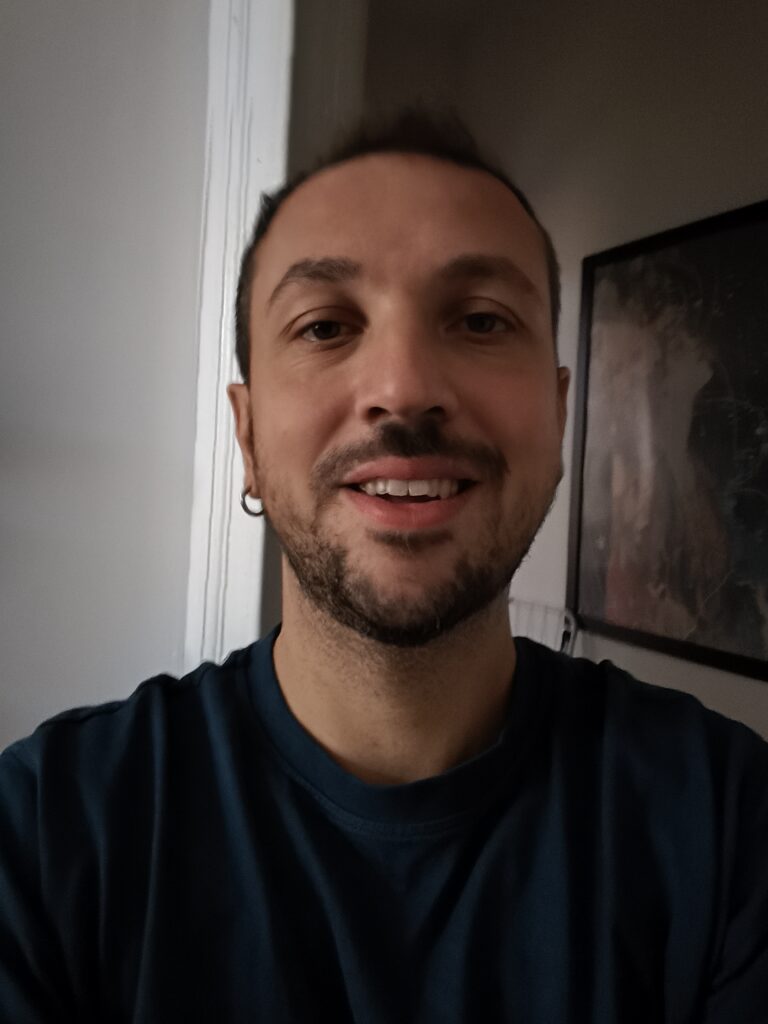
These are therapists at the centre who work with trauma. If you would rather be guided, our guided questionnaire Help me find a therapist can help you find the right person.
 Berlin
Fabio Sannino
I am a systemic therapist and a non-medical practitioner specialising in psychotherapy. My approach is intersectional; that is, I take into account the diverse…
View profile
Dr Suzan Naseredine
I provide integrative psychological counselling , therapy and coaching for adults, children, adolescents, and families, supporting clients with stress, anxiety, emotional difficulties, relationship challenges,…
View profile Berlin
Frederico Quelhas
Clinical Psychologist and Behavioral Therapist I am a passionate and EuroPsy-certified clinical psychologist, specializing in burnout management, stress, and anxiety. My approach is primarily…
View profile
Javier Llopis Sanz
Hello, my name is Javi, and I am a general health psychologist. I offer online therapy in Spanish from a perspective oriented toward paying…
View profile Berlin
Andrej Todorovic
About Me I am a psychodynamically oriented therapist, offering psychological support to adults navigating anxiety, depression, trauma, relationship difficulties, and periods of change or…
View profile Berlin
Gaia Gozzano
INDIVIDUAL I have a psychoanalytic background, but over the years I've found my approach is intuitively tailored to each person rather than built around…
View profileThis page offers general information. It does not replace medical or psychological advice, and it does not promise any particular result: how therapy works and how long it takes differs from person to person.